
Professional Development for Teachers in Chongqing – Practice-Oriented Training under Challenging Conditions
Recently, I spent three days again at a vocational school in Wanzhou, a district of Chongqing, to train teachers in the field of “practice-oriented training.” Chongqing, with an estimated population of 36 million, is considered the largest city in the world and impresses with its unique landscape – mountains, rivers, and its characteristic mist. Not to forget: the famous hotpot is a culinary highlight here.
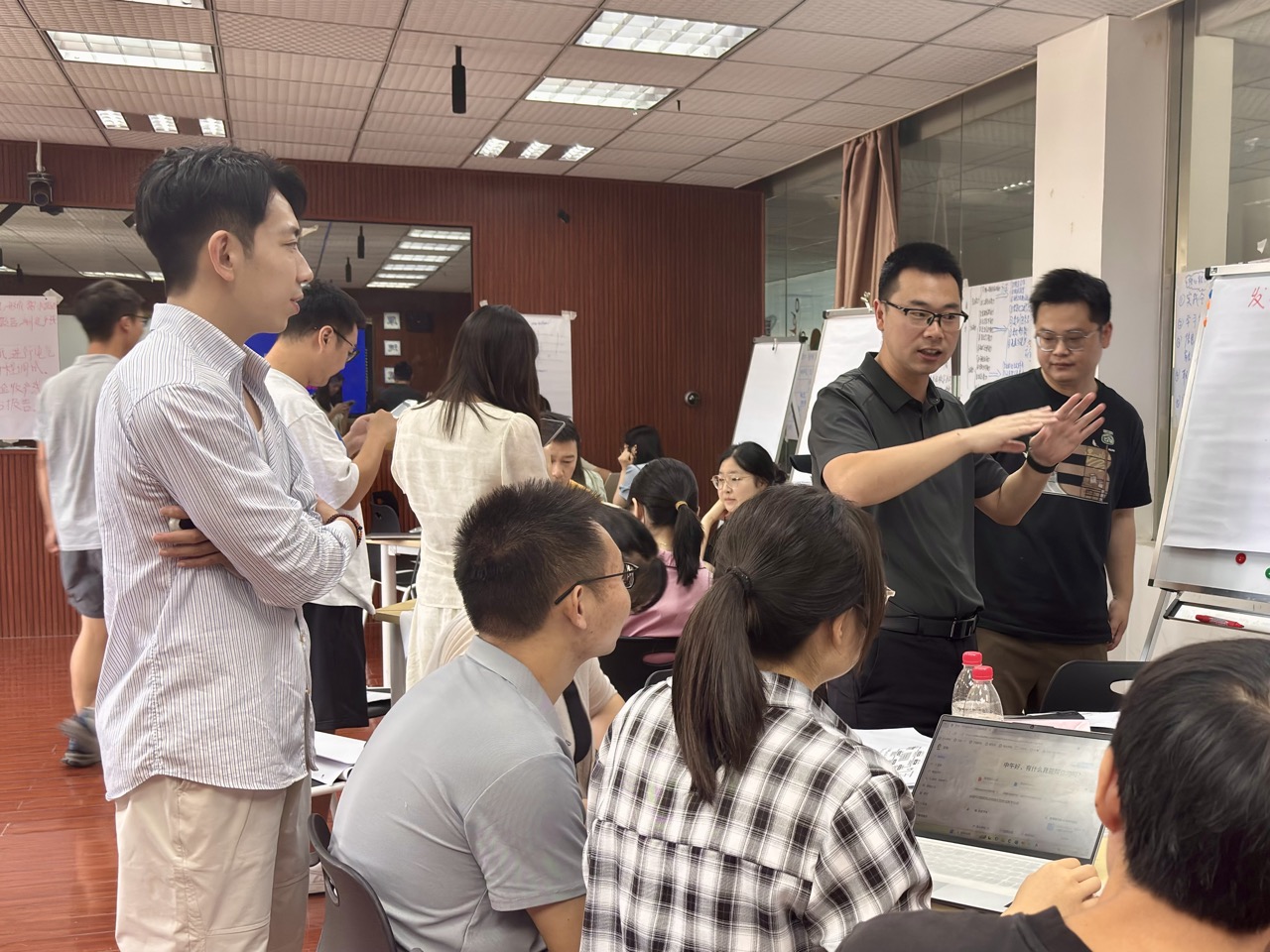
In a large classroom, 30 teachers are seated, while at least another 30 participate live and actively via videoconference. Together, we create posters, write learning cards, and conduct practical simulations. Initially, I was skeptical whether the training would succeed under these conditions: too many participants, little preparation, and a translator who had only joined the team two days earlier.
The teachers come from very different fields: automotive technology, industrial manufacturing, electrical engineering, health and nursing professions, but also from general education subjects such as mathematics, physics, music, dance, painting, German, and English. Despite enormous challenges – class sizes of 40 to 50 students, limited equipment in classrooms and workshops – I experienced an impressive learning atmosphere.
Integration of Vocational Intelligence and Artificial Intelligence in Training
Another focus of my training was the topic of the application of Artificial Intelligence (AI) in vocational education. Together with the teachers, we developed courses based on AI systems that are specifically tailored to the requirements of various professions. The goal is not only to professionally qualify the trainees but also to prepare them for the digital future. The teachers are meant to better understand how to use artificial intelligence to achieve better results in course development.
The combination of traditional practice-oriented training and modern AI elements opens new ways to make education more efficient and attractive. The teachers showed great interest in integrating these innovative approaches into their teaching and thus sustainably promoting the vocational intelligence of their students.
Conclusion: Innovation and Commitment as Keys to Success
What moves me most is the creativity and passion with which the participants design their posters and develop teaching ideas tailored to the real conditions on site. They demonstrate how dedicated teachers can work motivated and innovatively even under difficult circumstances.
This experience confirms my commitment to focus my energy and support exactly where it is most urgently needed and appreciated. Professional development is not just knowledge transfer – it is a contribution to strengthening the quality of education and promoting vocational training in challenging environments.
Chongqing impressively shows: with the right support, practice-oriented methods, and the integration of Artificial Intelligence, teachers can successfully support their students even in large classes and with limited resources – and prepare them for the future of work.