From static knowledge to interactive learning experiences: AI-supported video workflows in automotive training
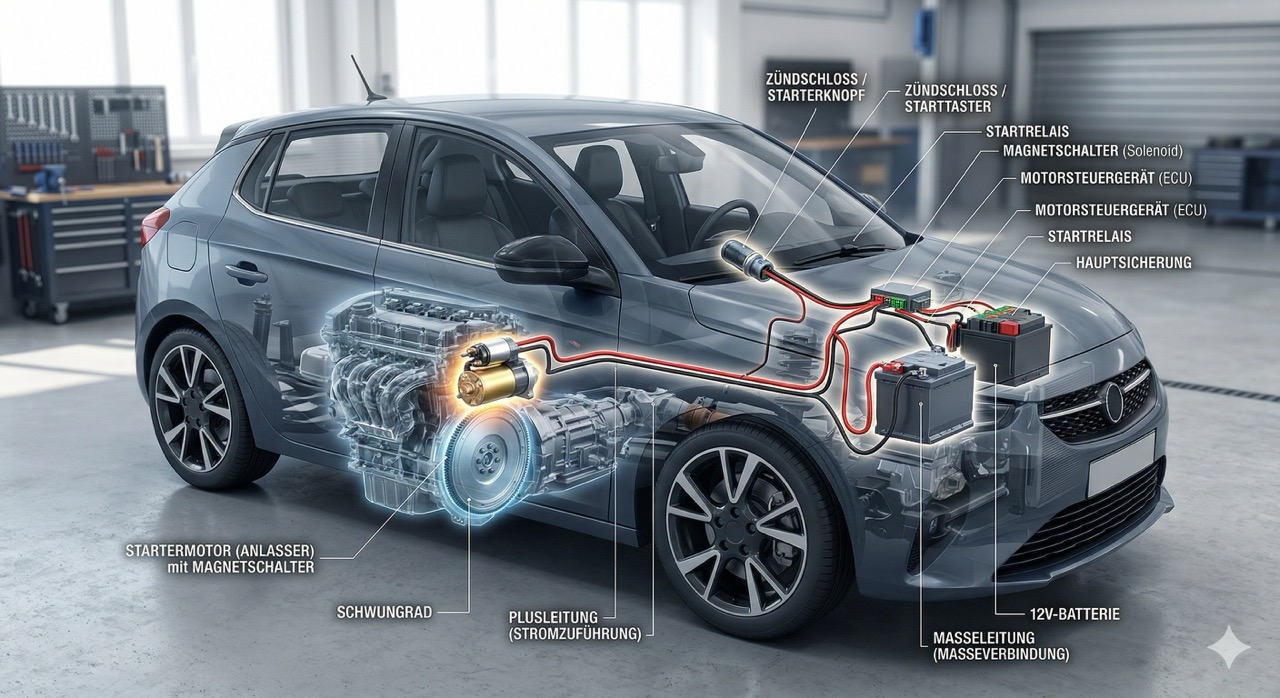
In modern vocational training, we often face the challenge of teaching complex technical processes – such as diagnosing a starter system – in a way that encourages trainees to actively participate and think along. The solution lies in combining intelligent content design with interactive learning modules.
In this post, I will present a workflow thatNotebookLM and H5Pused to create high-quality, interactive video overviews for Moodle and other LMS platforms in record time.
The 3-stage process: Efficiency meets didactics
1. Intelligent scripting with NotebookLM
The process begins with NotebookLM. Instead of painstakingly writing a script from scratch, we feed the AI with technically sound sources (manuals, circuit diagrams, worksheets). Through targeted expert prompts, NotebookLM acts as a technical editor for automotive engineering.
The result is not just a text, but adidactic dialogue scriptIt already contains:
- Precise technical descriptions for visual overlays.
- A chronological structure from basic understanding to practical repair.
- Direct involvement of trainees through professional “you” address.
2. Didactic anchor points: The H5P integration
A video only becomes a learning module when it compels learners to take action. This is where the key lies: NotebookLM’s script already contains specific elements.[REFLECTIONS-MARKER].
These markers serve as a direct template for the interactive elements in H5P. Instead of having to consider afterwards where a quiz makes sense, the AI provides the most didactically valuable moments, the appropriate questions (e.g., on voltage drop measurement), and immediate audio feedback.
3. Seamless integration into Moodle
The finished H5P module can be dragged and dropped intoMoodleIntegrating. For the second-year apprentices, this means: They don’t just watch a video about starter systems, they perform a virtual diagnostic. They have to interpret measured values before the video continues – a “safety net” for later work on the actual vehicle.
Why this approach makes the difference
| Advantage | Description |
| Technical precision | By using technical sources in NotebookLM, depth is maintained – no “AI hallucinations”, but hard facts about the starter system. |
| activation | The reflection markers prevent passive “binge-watching”. Knowledge is immediately tested through transfer questions. |
| Time saving | The creation of a 10-minute interactive video, which used to take days, is now reduced to a few hours. |
| Scalability | Once created, the module is available to all trainees in Moodle regardless of location or time. |
Conclusion
The combination of NotebookLM as the “content brain” and H5P as the “interaction engine” is a game-changer for the creation of digital learning materials in VET (Vocational Education and Training). Here, we don’t use AI as a replacement for the instructor, but as a highly efficient tool to translate technical expertise into a modern, engaging format.
Development Process:
Step 1: NotebookLM – Video Creation
Step 2: H5P – Integration of Interactivities
Step 3: WordPress – Publication