
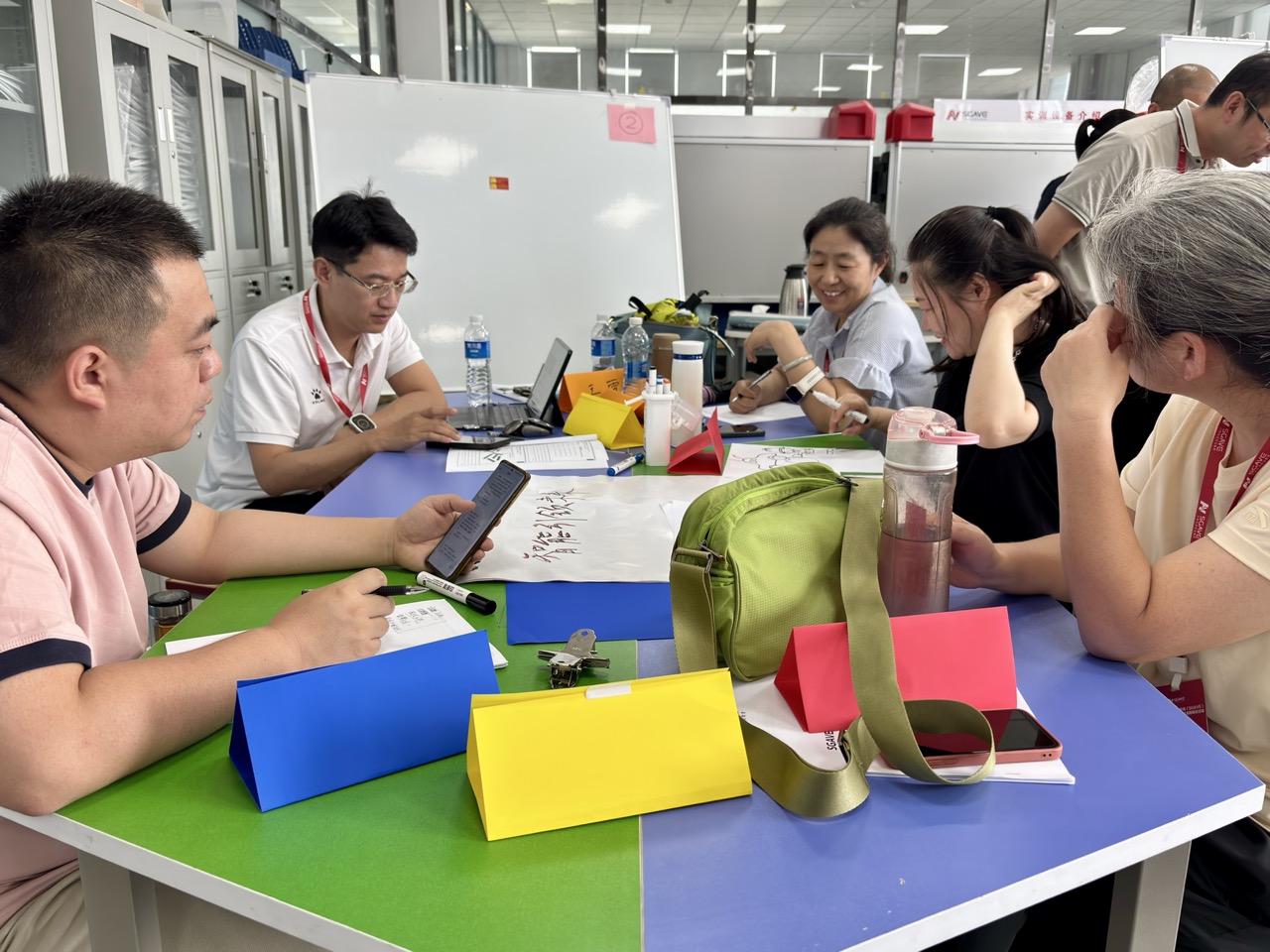
Survey of Chinese vocational school teachers in the field of automotive and industrial production
As part of my training for teachers at vocational schools, I conducted a survey among about one hundred teachers. The teachers work at Chinese vocational schools, especially in the field of automotive and industrial production. This statistical snapshot provides focused insights into the backgrounds of teachers, their professional challenges and their prospects for reforms of vocational education and training, especially with regard to experiences with the German dual training system. Of course, the number of respondents is not representative, but in my view it reflects the situation very well.

The participants had very different teaching experiences: many had been teaching for one to three or ten to fifteen years, some even much longer. It is striking that a significant proportion of the respondents had limited or no direct experience in companies, although some also had moderate to extensive industry experience, which brought valuable practical insights into the classroom. Since this group came exclusively from the automotive and industrial production sectors, their views are particularly relevant for technical vocational education and training in these disciplines.

The respondents expressed a pronounced enthusiasm and curiosity about vocational education and training, especially with regard to the dual training concept. The vast majority rated their motivation as the highest score, showing a clear interest in new insights and methods to improve teaching and learning outcomes. However, most of the teachers had little or no experience with formal further training on the German dual system; only a few stated that they had participated in several such trainings.
Proportion of interested teachers in continuing education
The survey of about 100 teachers from the automotive and industrial production sectors at Chinese vocational schools shows a clear picture of the question of motivation and interest in continuing education:
Enthusiasm and interest in continuing education: Over 90% of teachers rated their enthusiasm and curiosity about continuing education at the highest level.
A central theme that ran through the survey was the daily challenges in motivating the students. Many reported difficulties in maintaining the interest and participation of learners – a crucial factor, especially in vocational training, because practical skills and the connection to the world of work are central. A gap between the curriculum and rapidly changing industry standards has often been pointed out: teaching materials and methods often cannot keep pace with technological developments in companies. Another problem cited was the lack of modern equipment and up-to-date teaching materials – a particularly serious obstacle in the automotive and production sectors.
Top 3 challenges for teachers at vocational schools
Based on the feedback from about 100 teachers from Chinese vocational schools in the field of automotive and industrial production, the following three main challenges arise in everyday working life:
1. Low motivation of students to learn
2. Rapid technological change and outdated teaching content
3. Lack of modern teaching materials and practical equipment
German model of vocational education
The German model of vocational education and training was described by the respondents with terms such as “progressive”, “structured”, “professional” and “exemplary”. The teachers see this as a mission statement, especially because of the close integration with the requirements of industry. Many expressed the desire to adapt individual elements of the dual system to Chinese conditions instead of adopting them directly. This demand for localization was accompanied by the desire for concrete and implementable teaching strategies in order to strengthen the motivation of the students, the practical relevance of the curricula and the cooperation with companies in the long term.
Top 3 perceptions of the German dual system by Chinese vocational school teachers
Based on the feedback from the approximately 100 teachers surveyed from the automotive and industrial production sector, the following opinion emerges:
1. Progressive and innovative
2. Structured and practical
3. Exemplary reference model
Requirements of learning objectives
learning objectives in the training, the teachers signalled a great interest in learning the didactic and methodological approaches of the dual system: they were particularly interested in finding strategies to improve motivation and to bridge the gap between traditional teaching and practical work – areas from which both lecturers and learners in the automotive and industrial sectors would benefit significantly.
Top 3 Teachers’ Expectations of Continuing Education
Based on the answers of the approximately 100 teachers surveyed in the field of automotive and industrial production at Chinese vocational schools, the following three main expectations of continuing education can be identified:
1. Practical and innovative teaching methods
2. Adaptation and transferability to Chinese reality
3. Stronger link between school-based education and industry standards
Summery
In summary, this survey shows that teachers from China’s vocational schools for automotive and production professions are motivated and open to continuous development – with a particularly high interest in international best-practice models such as the German dual system. However, their feedback also underlines the sustained need for tailor-made continuing vocational training, better resources and a continuous convergence between vocational curricula and the dynamic needs of industry. The ongoing dialogue between teachers and reform projects remains a central element in the development of vocational education and training that is both globally inspired and locally effective.