How We Will Be Educated in 2040
The world of education is evolving rapidly, driven by technological leaps and new societal demands. But how do we navigate these changes? Instead of just reacting, we must actively think ahead and shape possible futures.
This is precisely the goal I have dedicated myself to over the past few months with a committed group of European experts. I am delighted to present the result of this intensive and cooperative collaboration: the report “The Future Learner: (Digital) Education Reimagined for 2040”.
A Project of the European Digital Education Hub
As an initiative of the European Digital Education Hub, founded by the European Commission, our “Squad”—an online working group—brought together around 25 members from various countries and educational sectors. Our central question was: “What could (digital) education for teachers and learners look like in 2040?”.
Using foresight methods, we analyzed trends and developed four possible, plausible scenarios for the future of education. These are not predictions, but rather thinking tools that help us understand the impact of today’s decisions on the world of tomorrow.
Four Plausible Futures for Education in 2040
The report outlines four archetypes of the future, ranging from growth and discipline to collapse and fundamental transformation:
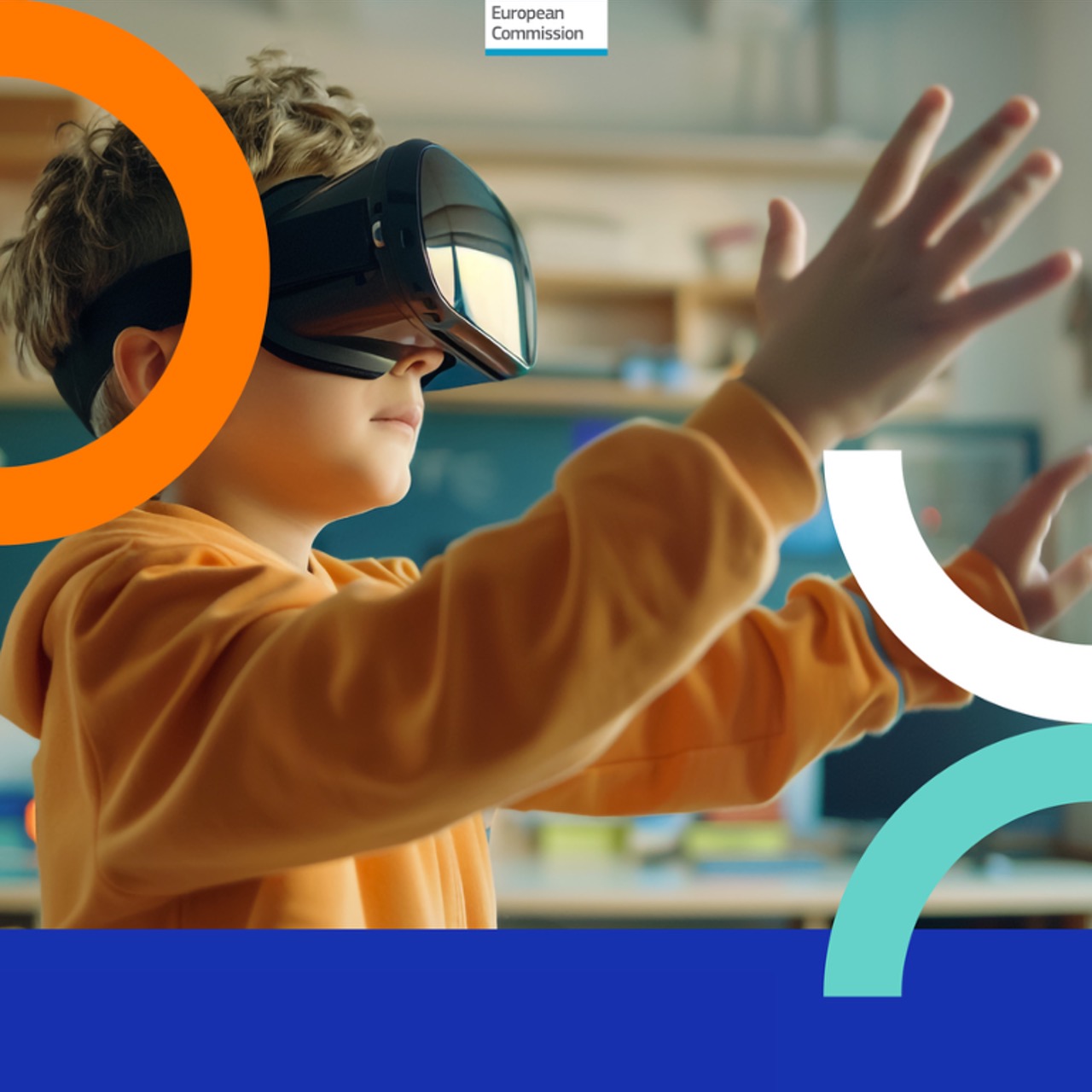
- Scenario 1 – Empowered Learning: A future where personalized, lifelong learning becomes the norm, supported by AI assistants and immersive technologies like VR/AR. The focus is on self-direction, international networks, and the development of transversal, human skills.
- Scenario 2 – A Constrained Framework: In this vision, education is more heavily regulated to ensure data protection, quality, and ecological sustainability. Technological progress is viewed more critically, creating a field of tension between innovation and adherence to strict frameworks.
- Scenario 3 – The End of Human Knowledge?: A challenging scenario in which the uncontrolled spread of AI-generated misinformation destroys trust in digital knowledge. In response, a counter-movement emerges, focusing on verifiable, practical, and purely human skills and communities.
- Scenario 4 – A Transformative Vision: Here, education is fundamentally re-imagined. [cite_start]It becomes a holistic, experience-based journey that centers on empathy, global awareness, and well-being. Technology is seamlessly integrated to support human learning processes, not to replace them.
What Does This Mean for Vocational Education?
As an expert in vocational education, these scenarios are of enormous relevance to me. They show how crucial teacher qualification, the development of modern curricula, and the thoughtful use of e-learning and AI will be.
Working on this report was a fascinating journey. It has shown once again how important international exchange and the cooperative shaping of our common future are.
I cordially invite you to read the full report and join me in the discussion.

Shaping the future of learning: How we will be educated in 2040