Between code and gravel roads: Why the real world remains irreplaceable
We live in a time where artificial intelligence can conjure breathtaking landscapes onto our screens, calculate perfect travel itineraries, and tell flawless stories. A world without friction, without pain, and without unforeseen errors. But as we marvel at these digital wonders, one question arises:What can an AI never replace, no matter how much you train it?Is the risk, effort, and sweat still worth leaving the safety of the digital world to gain experience in the real world? Or, viewed from the other perspective: What price must I pay for a life of security and friction?
I found the answer to these questions not in an algorithm, but on the saddle of a Royal Enfield, somewhere between Sipalay and Cebu.
The departure and the loss of control
9:00 AM
It’s 9 a.m. in Sipalay when we start the engines. The plan is simple: across Negros, over the mountains, back to Cebu. The digital map promises a clear route, but reality shows us breathtaking roads through the lush green of the Negros mountains, a depth no screen in the world can ever capture.
12:00
We’re eating a quick sandwich at a roadside stand. We didn’t have breakfast and need something to eat. A sandwich from the refrigerated section and a chocolate bar so we can stay awake if necessary.
1:00 PM
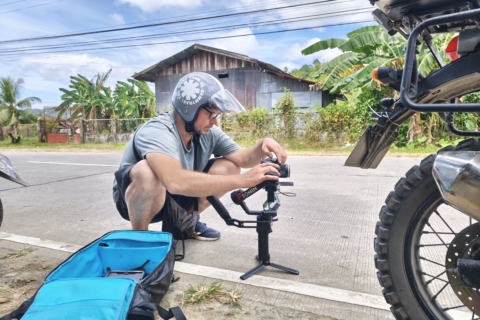
We stopped to capture the scenery for filming. My son spotted farm workers in the valley ahead of us, and then it happened: the first crack in the perfect plan. We lost the tripod. It was on my son’s Royal Enfield.
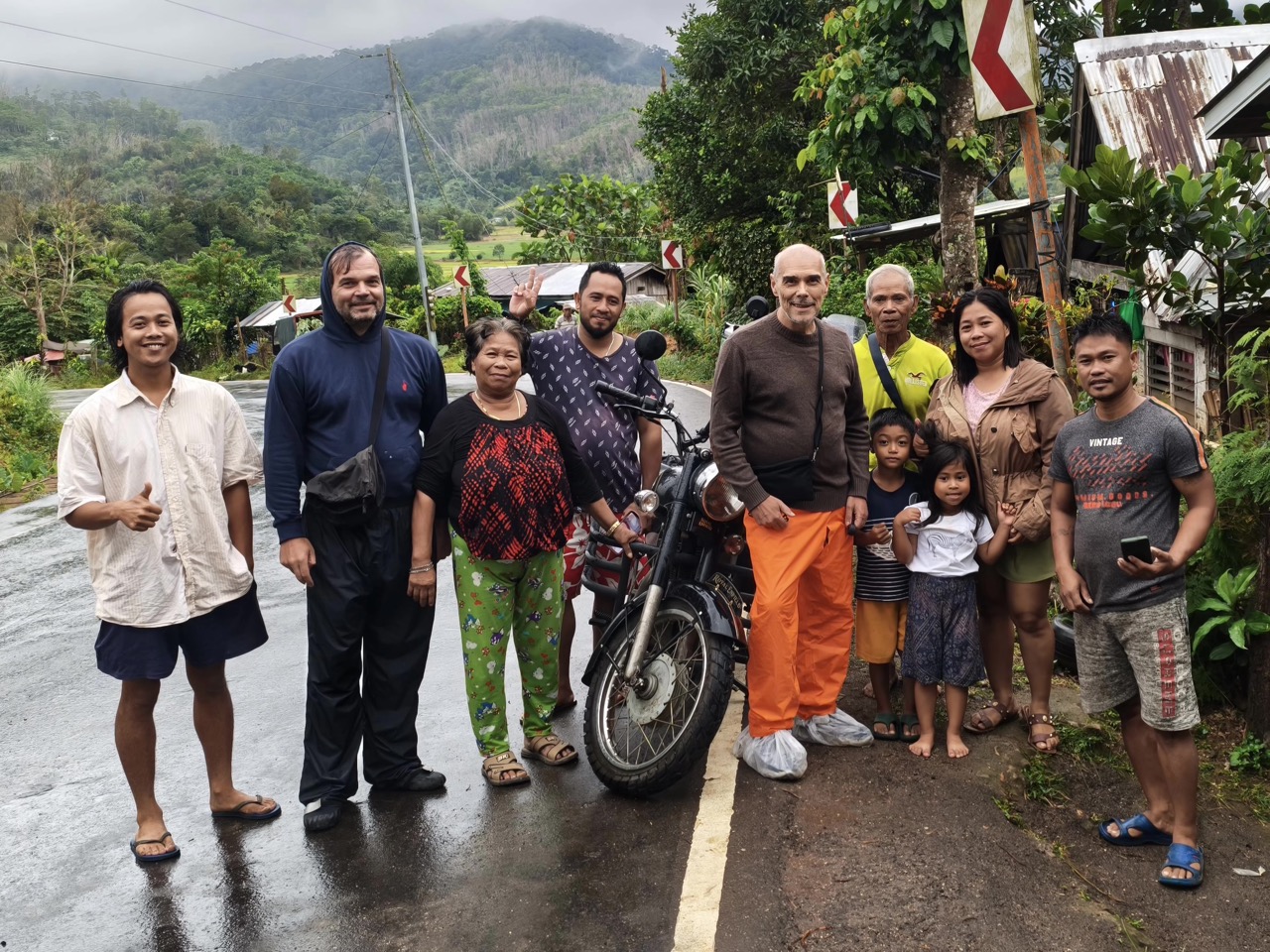
Almost simultaneously, the sky clears. It begins to rain heavily. We take refuge in the three nearest farmhouses – simple tin shacks by the roadside. A family lives in one of these shacks, and we are able to take shelter with them and put on our rain gear.
2:00 PM
The inhabitants of the huts are not only friendly, they don’t hesitate for a second to help us with the search. We ride back into the rain. Two heavy Royal Enfields and the small family on their two light, local motorcycles.
It started raining heavily again on the way. My rain suit is holding up well, but my shoes aren’t waterproof. I buy two plastic bags and some tape at a shop along the way. People find it funny and watch me as I waterproof myself on the flour sacks in the shop.
2:45 PM
After 45 minutes in the pouring rain, we actually found the tripod again. We thanked the finder and returned to the farm, soaked to the bone.
3:30 p.m.
It’s now 3:30 p.m., time is pressing, but the family invites us in for coffee and cake. We already feel at home. We’re old friends, and we’re enjoying the moment – warm, impromptu, and absolutely perfect in its imperfection. Plastic chairs are moved around, and soft, plastic-wrapped rolls are handed out. No AI can simulate the feeling of sitting soaked to the bone in a tin shack, sharing hot coffee with strangers who have just become friends.
4:00 PM
We have to go, the ferry won’t wait. What follows is a wild ride through the now increasingly busy coastal countryside. We ask for directions along the way. Time is running out – only half an hour left, practically impossible. Adrenaline surges, concentration narrows to the next evasive maneuver. We reach the port exactly five minutes before departure. We scramble to gather our last bit of cash; our digital money isn’t working, and people have helped us get on the ferry and secure our motorcycles.
5:30 p.m.
The crossing is rough; a typhoon has been forecast. I lay down on the wooden bench on the upper deck, a life jacket under my head, and simply fell asleep from exhaustion. You become a bit more easygoing when you get older. My son is sitting next to me, keeping an eye on me, so nothing can happen to me. I wake up when we’re almost at the other shore. The sea is rough; I see sometimes the sea, sometimes the darkened sky when I look out over the railing.
7:00 PM
When we arrived in Cebu, we were hungry and exhausted. We ate at a simple local stall – very basic, but very good. The women would serve you food from various pots and platters. Then came the final leg: on to Carcar to return my motorbike to the rental company. Another 1.5-hour drive.
8:30 p.m.
We continue on our way. It’s now night and very dark. The motorcycles only have very basic lighting, vintage style. You have to concentrate very hard when driving on the unlit and sparsely traveled roads.
10:00 PM
We arrive after 10 p.m. The Indian man who gave me the motorbike is already waiting for us. His tin shack is accessible via a dirt track. But reality has another twist in store: no more buses are running, and the taxi drivers refuse to take us to Cebu City at this hour. Our Indian landlord saves us – he gets in his car and drives us to Cebu City himself.
11:30 PM
At 11:30 pm we finally arrived in our hotel room. We were checked in, had two cold beers in our hands, and were incredibly happy.
We hardly spoke that day. We crossed beautiful, rugged landscapes, lost something, and found it again with the help of strangers. We raced against time, braved the storm, and washed the dust off ourselves, exhausted, that evening.
So why bother?Because while the virtual world can show us the destination, it can never let us feel the journey. An AI doesn’t know the smell of rain on hot asphalt, the taste of hastily drunk coffee in a cabin, the pleasant exhaustion in your bones, or the feeling of having completed another adventure together.
That was a day when we hardly spoke, but reallylivedWe have it. And it is precisely this harsh, unpredictable, and challenging reality that makes us human. It is worth every risk and every effort.
The questions that remain: A look ahead to tomorrow
We build machines and train algorithms to make our lives easier, safer, and more predictable. But this journey forces us to pause and confront the essential questions of future human existence:
- The value of the resistance: If we create a world in the future that functions completely without friction, without pain, and without unforeseen errors, won’t we lose precisely the physical and mental challenges that help us grow as human beings?
- The illusion of perfection: Artificial intelligence can conjure breathtaking landscapes onto our screens, calculate perfect travel itineraries, and tell flawless stories. But isn’t it precisely the first crack in the perfect plan—like a lost tripod on the Royal Enfield and a sudden downpour—that transforms a simple drive into a truly memorable experience?
- The currency of empathy: No AI can simulate the feeling of sitting soaked to the bone in a tin shack, sharing hot coffee with strangers who have just become friends. How do we preserve this spontaneous, unpredictable humanity in a society that increasingly shies away from the risks and effort of the real world?
- The price of security: What price must I pay for a life of safety and friction? Is digital convenience really worth giving up the smell of rain on hot asphalt or the pleasant exhaustion in my bones after a real adventure?
- The craft of experience: If algorithms can theoretically do everything for us, doesn’t that shift the very essence of what it means to be competent in the world? Shouldn’t we consciously seek out situations where we have to improvise, repair things with our hands, and rely on the care of those around us, like on that wooden bench on the ferry?
Ultimately, the realization remains: AI may be able to calculate the perfect route for us and write the flawless instruction manual for life, but we have to drive ourselves on the dark, unlit gravel roads.
Big BamBoo Beach Resort Sipalay