
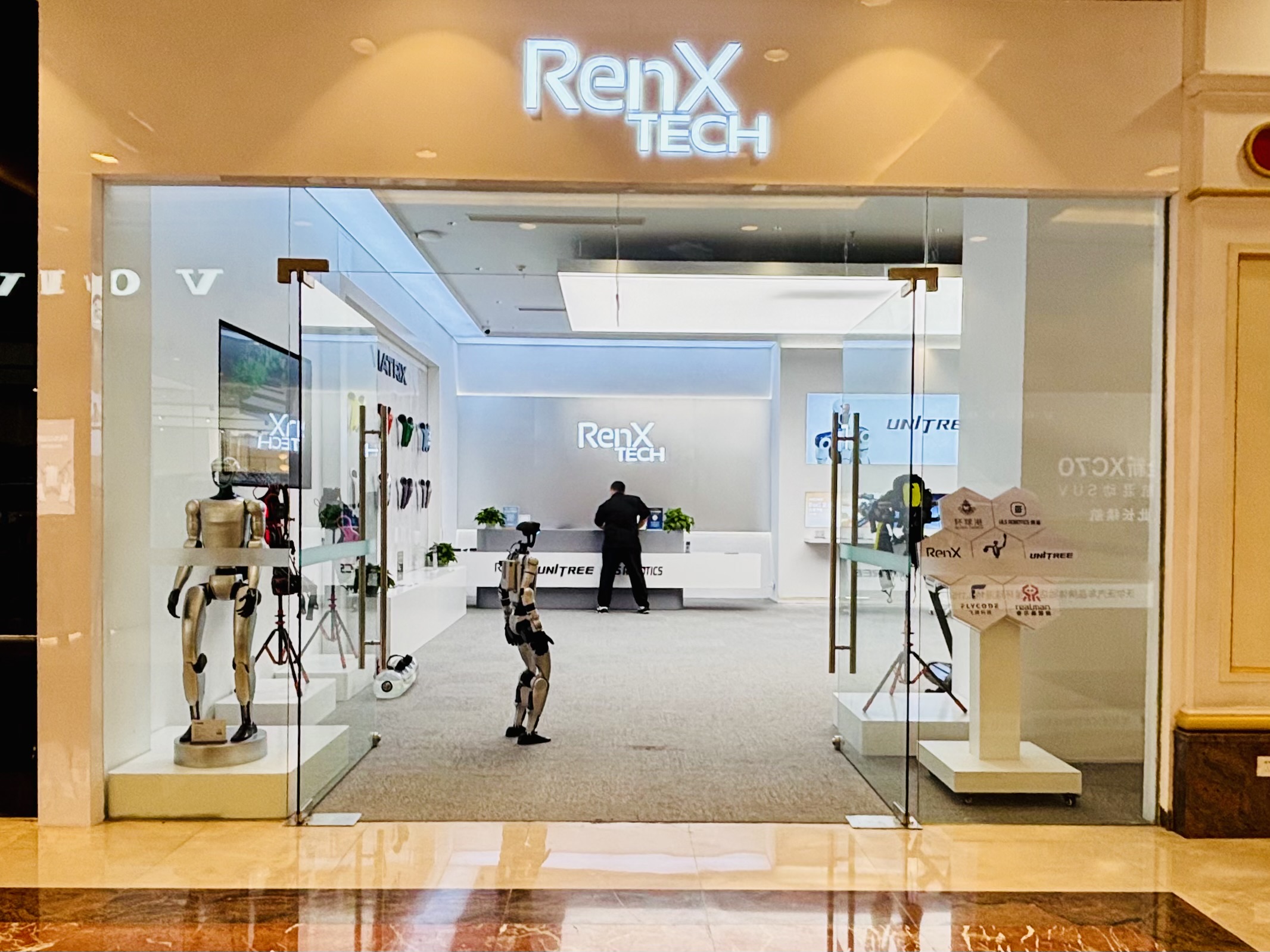
Living in Shanghai, you get used to an astonishing pace of change. But even here, there are moments that make you pause and marvel. I experienced this recently during a visit to the shopping mall right around the corner. At the main entrance, prominently placed between the sleek minimalism of the Apple Store and the cool elegance of a Volvo showroom, a new shop opened a few weeks ago: a specialty store for robots.
This isn’t a science fiction set; it’s the living reality of China in 2025. This placement is no coincidence; it’s a clear statement. The robot is presented as the next big thing, on equal footing with the status symbols of our time—the latest smartphone and the safe family SUV.
The Chinese are not just fast; they have an almost boundless faith in technology. What is often still tentatively discussed in the West is implemented here with impressive speed and pragmatism. Robots are clearly the next major trend. The general assumption is that in just three to five years, this market will be so developed that these helpers will become affordable for everyone.
This sight surprised me and made me think. The speed of this development is dizzying. What does it mean for our society when humanoid robots soon become as commonplace as a mobile phone?
What are the expected positive impacts?
The potential benefits are enormous. Think of the support for the elderly, who could live self-determined lives in their own homes for longer with the help of robots. In the education sector, they could act as patient, individualized learning tutors. In the service industry, they could take over physically demanding and repetitive tasks, thus counteracting the shortage of skilled workers. This would give people more time for creative, strategic, and, above all, interpersonal activities.

What are the challenges?
But where there is light, there is also shadow. The integration of robots raises profound questions. Foremost is the concern about jobs. What will happen to the people whose jobs are replaced by machines? This requires a radical rethinking of education and retraining.
Another critical point is social interaction. Will we unlearn how to interact with each other when we get used to seamless interaction with machines? The danger of loneliness is real. Last but not least, there are complex ethical and data privacy issues. Who owns the data that a robot collects in our most private spaces? How do we ensure that these systems are secure and protected from manipulation?
The shop in my neighborhood is more than just a store. It’s a window into a future that has already begun. A future full of fascinating possibilities, but also serious challenges that we must face.
Unitree Robotics: Link